

Endodontics
2000+
Happy smiles per month
97%
Client satisfaction
60+
Team members
30000+
Amazing clients
When treatment is needed?
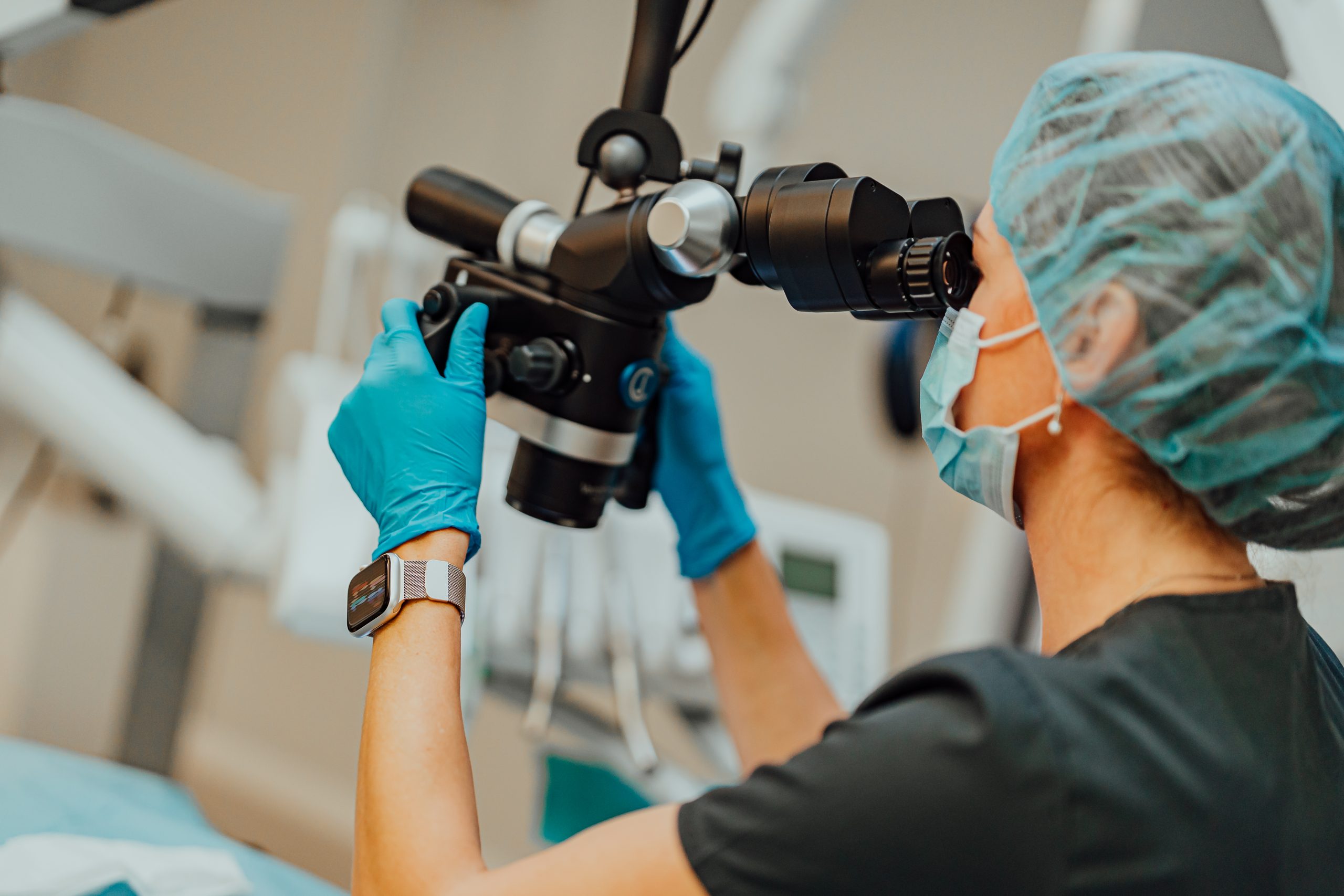
Your doctor uses a microscope throughout the treatment process. Thanks to the method of treating teeth using a microscope, the procedure becomes shorter, more efficient and more precise.
Sign up for a consultation
Planning a visit to the dentist, but don’t know where to start? Book a consultation before treatment and get answers to all your questions. We will help you understand the necessary procedures and take the first step to a healthy smile!

How Endodontic treatment is done in our clinic?
In our clinic, endodontic treatment is performed using a microscope and advanced diagnostic methods, allowing precise detection of damage and high-quality root canal therapy. The procedure includes removal of inflamed or infected tissue, thorough mechanical and chemical cleaning of the canals, and tight sealing with biocompatible materials. This approach helps preserve the natural tooth and prevents the need for extraction or retreatment.
Diagnostics and Planning
The dentist performs an examination and 3D X-ray to assess the condition of the affected tooth and identify any inflammation or infection in the root canals.
Anesthesia
Before starting the procedure, the dentist administers anesthesia to minimize discomfort and ensure a painless treatment.
Accessing the Canal
The dentist makes a small opening in the crown of the tooth to access the root canals, where the nerves and blood vessels are located.
Nerve Removal
All root canal treatment is performed under a microscope, allowing the dentist to precisely remove infected or dead tissue and thoroughly clean the canals.
Filling the Canal
After cleaning, the canals are filled with a specialized material (usually gutta-percha) to prevent reinfection.
Tooth Restoration
After completing the endodontic treatment, the tooth is restored with a filling or crown to regain its functionality and protect it from further damage.
Positive outcomes after procedure
What our patients say
Positive feedback from patients confirms the high level of trust in our work. We greatly value every opinion, as it helps us continuously improve the quality of our services.
Meet our team
Our endodontists are highly qualified specialists with many years of experience who expertly utilize modern methods for root canal treatment. They are always ready to offer an individualized approach to each patient, ensuring maximum comfort and treatment effectiveness.

Olena Oleksiienko
Dentist with Experience in Root Canal Treatment
- 18 Years of Experience
- Languages: Ukrainian, English, Russian
F.A.Q.
Treatment under a microscope allows the dentist to see the smallest details, which increases the accuracy of infected tissue removal and thorough cleaning of the root canals.
The procedure under a microscope reduces the risk of errors, minimizes patient’s discomfort, and increases the likelihood of a successful outcome, improving the quality of treatment.
The procedure is performed under anesthesia, so the patient does not experience pain or any discomfort during the treatment.
The duration of the procedure can vary depending on the complexity of the case, but it typically lasts from 60 to 90 minutes.
After the treatment, it may be recommended to avoid hard foods and to take care of the treated area for a few days. The dentist will also provide advice on oral care in the postoperative period.
Yes, in some cases, root canal treatment may be performed under general anesthesia, especially if the patient has severe anxiety or specific medical indications. However, this decision is made individually after consulting with the dentist.
Sign up for a consultation
Planning a visit to the dentist, but don’t know where to start? Book a consultation before treatment and get answers to all your questions. We will help you understand the necessary procedures and take the first step to a healthy smile!
